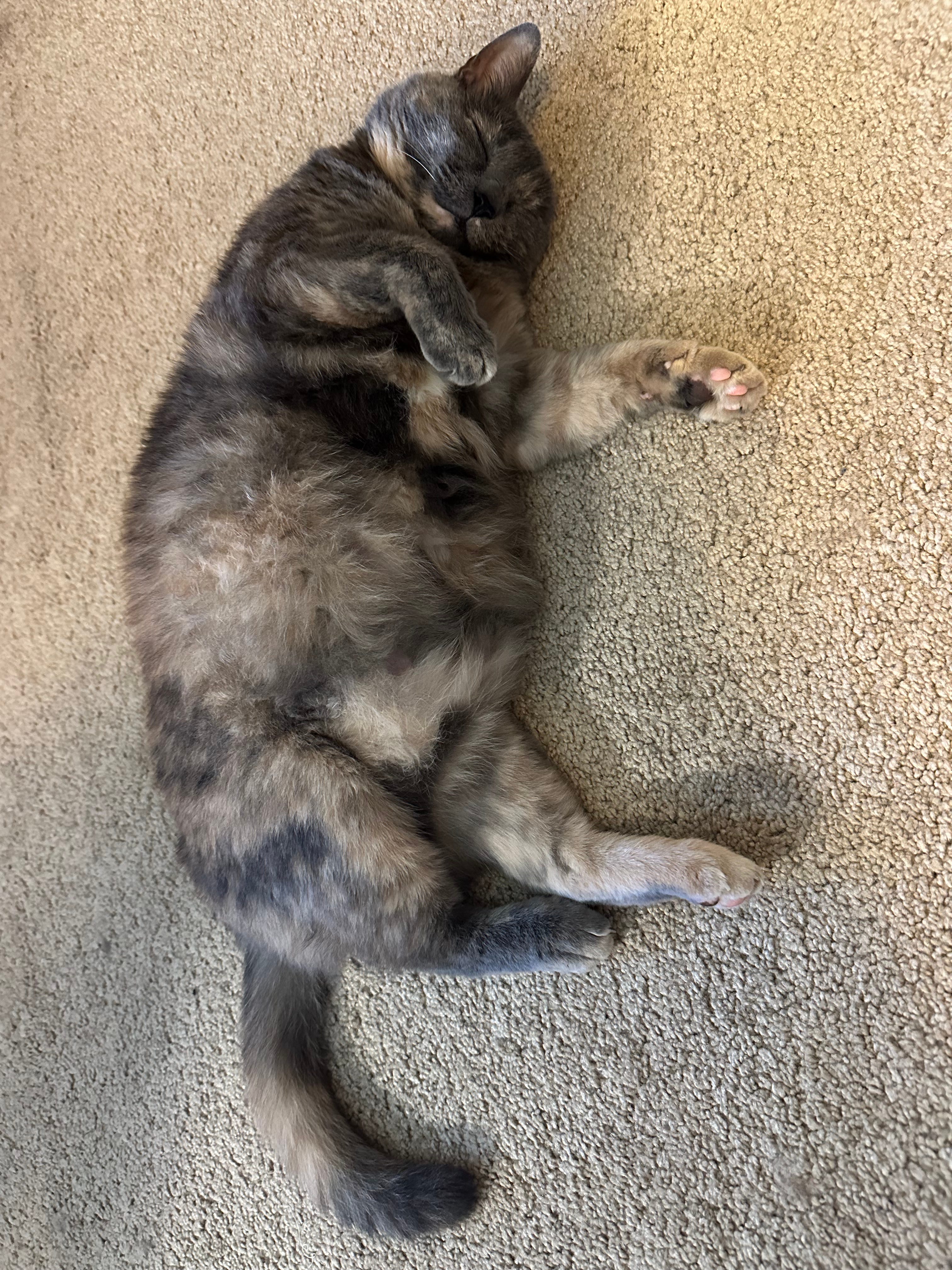
I opened my Instagram and was flooded with DMs and comments. “Where is Hazel now?!”, “Is Hazel okay??”, “How could you call yourself an animal lover and abandon your cat!!!!” I was in the UK at the time, so I hadn’t seen the episode that provoked the outrage. 90 Day Fiancé: The Other Way aired during the evenings in the US, so I was asleep when every new episode that contained part of my story went live. It took me months before I could face what the Reddit threads were saying about me.
I was a self-proclaimed animal advocate, and yet I had re-homed my cat, Hazel, to my friend Madison when I was exploring moving to the UK. The internet was outraged that I could do something so allegedly wicked and cruel. For over a year I felt lost about whether I should engage with the comments and help provide the full picture.
The short answer, if you just want it up front: Hazel is happy and thriving. She’s living with my friend, Madison, they’re deeply bonded, and by every account I have, Hazel’s quality of life is wonderful. The rest of this piece is the full story of how we got there—I didn’t want anyone to have to read to the end to hear that.
For over a year, I ignored it all. Now, I feel like I’m doing everyone a disservice by not addressing it. Firstly, because I do believe the event caused genuine distress to some viewers. Second, because I want the full story to be out there. And lastly, and most importantly, because the predicament I was faced with brought up genuine questions about animal ethics and the difficulties of moving animals around the world. I think this is a conversation humanity hasn’t wrestled with enough. I address all of it here.
My brief stint on reality TV
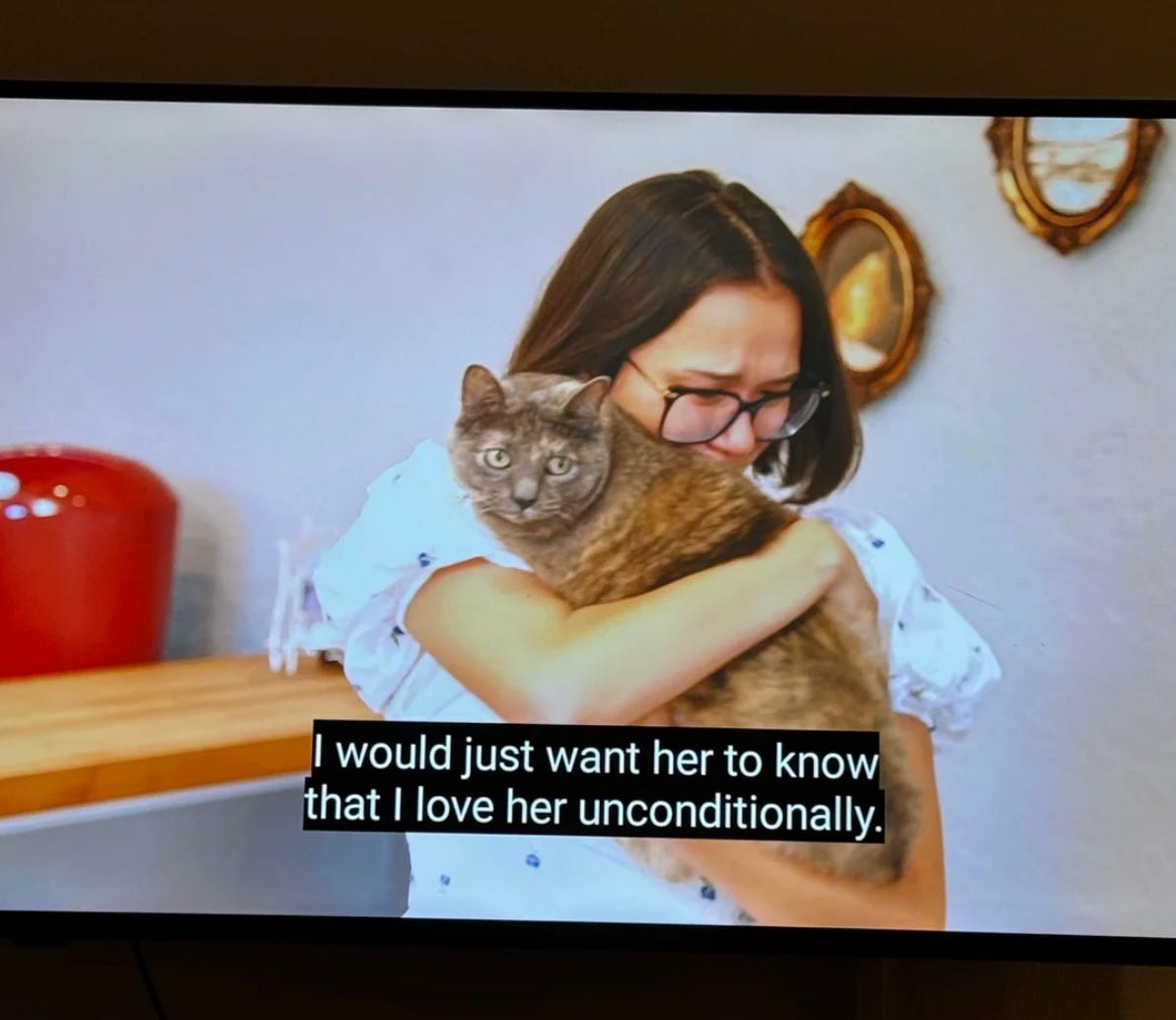
For those unfamiliar: a couple of years ago I was exploring moving to the UK to live with my then-fiancé, Matthew. This was filmed for 90 Day Fiancé: The Other Way, a show that follows long-distance couples in different countries as they try to merge their lives. My air time was minimal compared to everyone else on my season, largely because I ended my engagement four days into filming. The show aired a year later.
As part of the move I re-homed my cat, Hazel, who I had been caring for for two years. Hazel went under the care of my friend Madison, an animal lover, and the scene is shown in one of the early episodes of my season. It was genuinely one of the hardest goodbyes I’ve ever experienced.
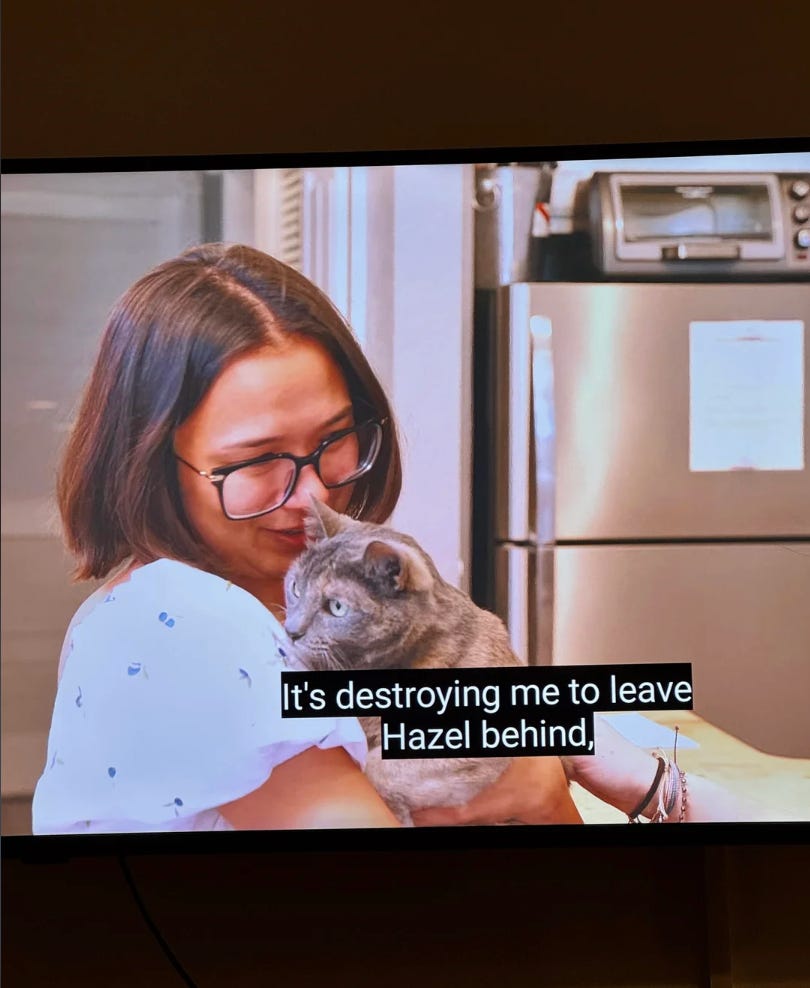
I got many kind messages from people who told me that when watching the episode, they cried with me. I think for many it touched a nerve and represented the deep relationships many of us forge with animals. Not being able to explain to Hazel why this was happening is what made the goodbye so difficult for me. I wanted her to know I was doing this because I loved her, and I wanted her to live out the rest of her life in a stable, loving home.
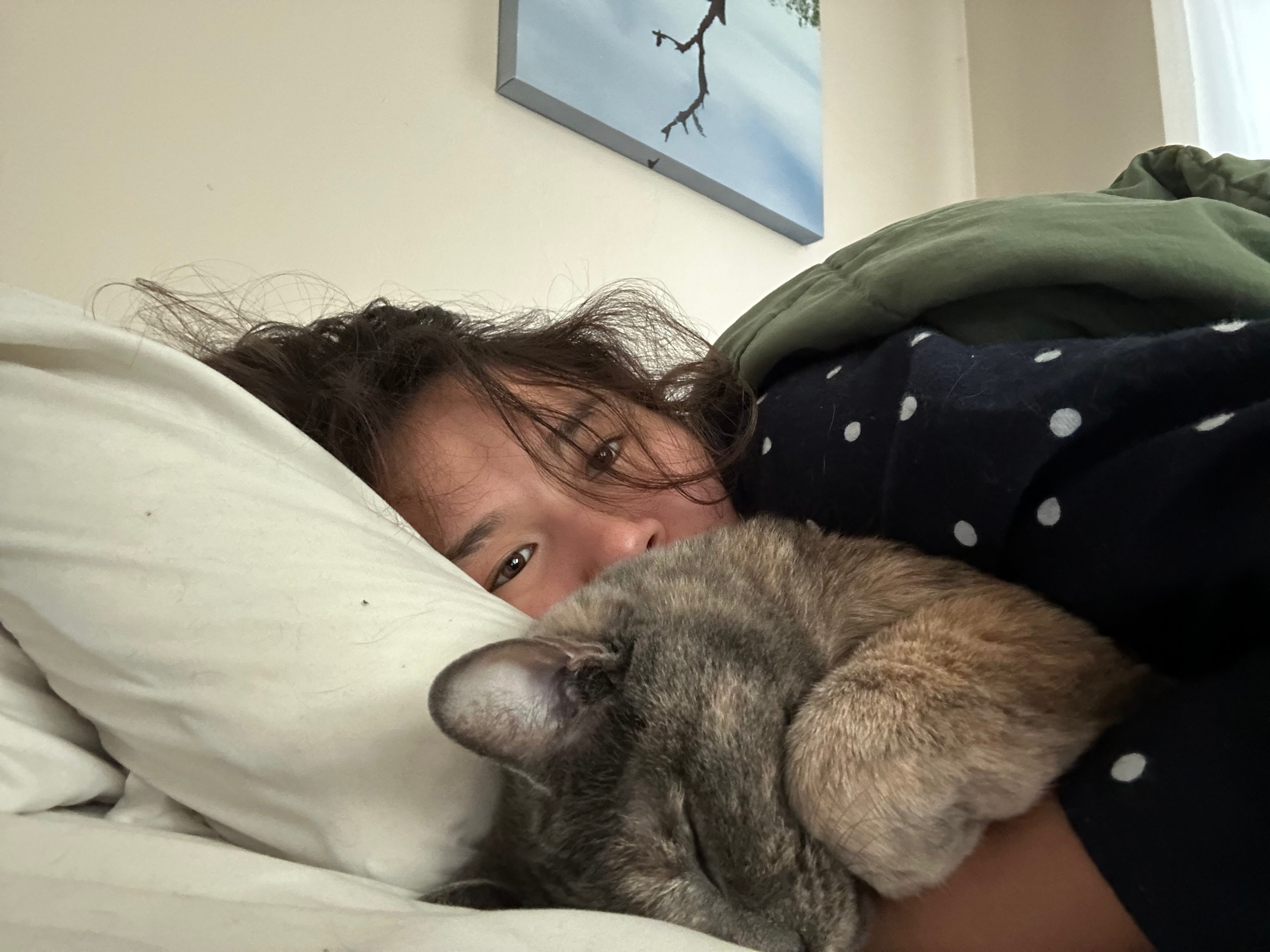
My relationship with Hazel was unlike any I’ve ever had with another animal. We were completely comfortable in each other’s presence. She would melt in my arms and insisted on being held at all times. Every night we snuggled to sleep. I described her as part-rabbit, part-pig—she loved to hop around and play, and she loved her Benevo kibble, which filled out her beautiful round belly. Like most people feel about their animal companions, I felt like she was truly special.
I know what you’re thinking — how could I re-home Hazel?
This is what seemed to shock people most: that I could break the bond I’d built with Hazel for a romanic relationship many viewers described as mediocre.
Before I address that directly, it’s worth understanding how Hazel and I were introduced. Many people assumed I’d had Hazel for all 11 years of her life, since that’s her age as stated on the show.
Hazel came into my life via a family friend, who I’ll call Sally. Sally had a friend, who I’ll call Dora. Dora found Hazel as a stray kitten and began feeding her from her patio. Though Dora never let Hazel inside, she became Hazel’s primary caregiver for the first eight years of her life. Sally would look after Hazel when Dora traveled.
After eight years, Dora moved in with her son and grandchildren. Because one of them was allergic to cats, Hazel couldn’t go with them. Sally took on the responsibility of finding Hazel a new home.
I saw Sally regularly and heard how she was struggling finding Hazel a home. At one point an elderly couple was interested in adopting Hazel, but returned her after she scratched their couch. This went on for months, and Sally was eager to find a solution partly because her own cat and Hazel weren’t getting along and had to be kept separated. This left everyone in a perpetual state of stress.
At the time, I was in my second year of law school and living alone on the bottom floor of a converted house. I could offer Hazel a comfortable home and give Sally and her cat some relief. So I offered to adopt her.
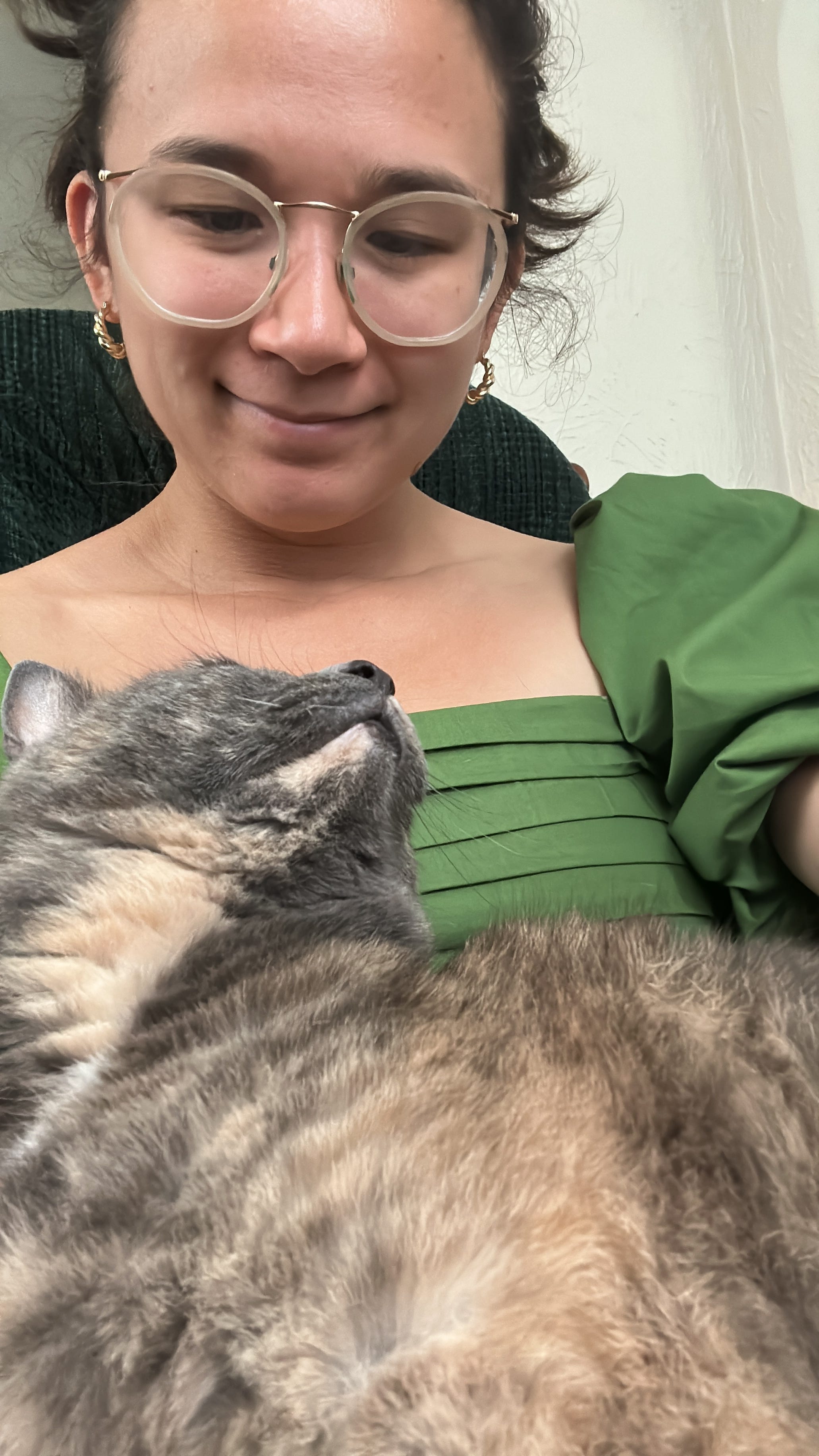
In hindsight, this may be where I made a mistake. Some would say I should have been more certain about my future before adopting an animal, and I tend to agree. I wasn’t sure what I’d be doing after law school. Matthew and I were dating, but we didn’t know whether he’d move to the US, I’d move to the UK, or whether we’d end up together long-term at all. Still, I was in a position to help Hazel, and I believe people should help animals when they reasonably can. If I could give her a good home, why shouldn’t I? It’s a similar rationale to why fostering exists. If I’d been fostering Hazel and found her a permanent home two years later, I would have been called an animal hero, even though Hazel’s experience would have been identical.
Why didn’t I bring Hazel to the UK?
When Matthew and I first discussed my move, we planned for Hazel to come too. But neither of us had ever done a international move with an animal, so we didn’t fully understand what that would actually entail.
The UK requires animals to fly into the country as cargo. My view is that this is unnecessary. Animals are sentient beings, not luggage, and should be cared for and comforted by humans in flight. Many animals do fly cargo without incident, but there’s real risk: animals have suffered anxiety attacks, become seriously ill, and even died this way.
That said, I don’t think cargo travel is always unethical. There’s often a genuine trade-off. A friend of mine runs an international cat rescue in Dubai; when a cat there is matched with a home abroad, cargo is often the only route. All of those cats have been fine, and the trade-off—a loving home instead of life on the street—seems clearly worth it.
But what if the trade-off isn’t worth it? Hazel is deeply distressed during car rides: she would often generate high-pitched, prolonged howling, and would urinate in her carrier. I was terrified she’d have a panic attack alone in cargo on a long international flight. Honestly, I felt like I was going to have a panic attack just thinking about it.
I looked into alternatives. One was flying with Hazel to France, where she could travel with me in-cabin, and then hiring a an animal transport service to bring her into the UK (since I couldn’t take her on the Eurostar). That meant an even longer journey and would require her riding in an unfamiliar vehicle with other animals. Another option was travel by cruise ship, but I learned that animals are kept in rows of cages for the duration, similar to shelter housing. None of the alternatives seemed meaningfully better.
On top of that, Matthew was still living with his parents, and we hadn’t yet settled on a city. If I’d brought Hazel over, she would have landed in an unfamiliar cottage with a dog and another cat, on top of an already traumatic journey. I didn’t think the trade-off was worth it.
My move to the UK also wasn’t guaranteed to be permanent. The plan was to spend six months together and, if we felt committed, apply for a spousal visa so I could remain. Matthew and I had never spent more than five weeks together at a stretch, so testing the relationship first felt sensible. And there was nothing I wanted to avoid more than flying Hazel over via cargo, only to fly her back the same way if things didn’t work out.
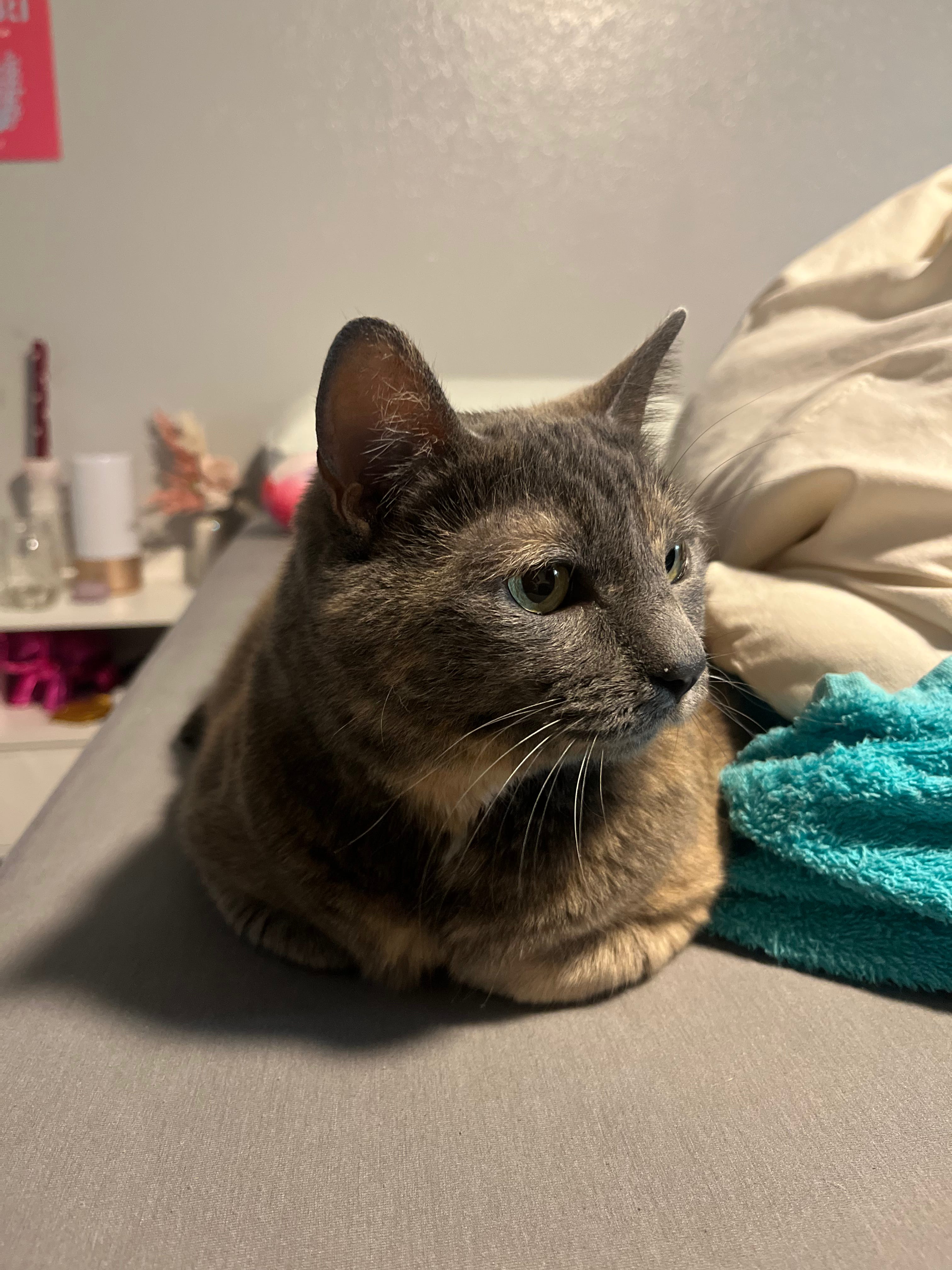
Fortunately, my friend Madison had been wanting to adopt a cat. I asked if she’d take Hazel in while I was in the UK, and she said yes. We agreed to check in regularly, and if Hazel showed signs of distress, I would come back to the US. Within 48 hours, Hazel had bonded with Madison and they were sleeping together every night. I’m endlessly grateful to Madison, who I trust completely and who has taken wonderful care of Hazel.
Why am I not reunited with Hazel now?!
After I ended the engagement, many people assumed I went straight back to the US and picked up my old life. The opposite happened.
I soon started a remote job in the animal movement that required a lot of travel. For over a year after the breakup, I was rarely in one place for more than six weeks at a time, essentially a traveling nomad between the US, UK, and Germany. It would have been irresponsible to bring any animal into that.
During that year, Madison and Hazel grew closer. I visited Hazel twice, and both visits confirmed she now felt more comfortable with Madison than with me. That reality was hard to sit with, but I was genuinely relieved that she and Madison had settled into a happy bond.
Last summer, my nomad life ended and I moved to London permanently. I rent a house with three housemates, and our landlord doesn’t allow animals. Even if that weren’t the case, I wouldn’t relocate Hazel unless it was clearly best for both her and Madison. Right now, they’re both content, and that’s what matters most.
What have I learned?
Moving animals across borders is genuinely complicated, and current rules and restrictions don’t make it easier. In an ideal world, all of us would be able to care for the children and animals in our lives comfortably, for their entire lives. But the reality is that none of us can fully predict our futures, especially when we’re young and our living situations are shaped by jobs, relationships, and circumstances beyond our control. Sometimes we’re no longer the best person to be a caretaker, and it’s in the animal’s best interest—like a child’s—to be re-homed with someone who can offer more stability.
I want to be clear that I’m talking about re-homing: taking on the responsibility of finding an animal a suitable new guardian. I’m not talking about surrendering an animal to a shelter because you no longer feel like caring for them.
I do acknowledge that this situation caused real distress and concern for some viewers, and I’m sorry for that. I hope this gives you the fuller picture, and I hope it reassures you: Hazel is happy and thriving.
Looking forward, I hope the UK and any country that still requires it moves away from mandatory cargo travel for animals. I hope we recognize that it isn’t always ideal or possible for an animal to stay with the same person for their entire life, and that re-homing can sometimes be the most loving choice available. And I hope we keep prioritizing what animals actually experience—making sure they’re relaxed, cared for, and able to thrive, wherever that ends up being.